

Seemingly inspired by games such as Little Nightmares and Limbo, which both see a protagonist making their way through surreal, dark landscapes, twisted by a child’s perspective of their surroundings, Daydream: Forgotten Sorrow is a beautiful game, but can’t quite pull all of its parts together to make a satisfying whole.
Though perhaps a deliberate choice so as to leave its nightmarish narrative open to interpretation, there’s so little in the way of in-game story that it’s difficult to work out why you’re doing what you’re doing in Daydream: Forgotten Sorrow.
The game opens with a panic inducing, genuinely scary chase – before it slows down somewhat to allow for a more laid back, if still oppressive-feeling, puzzle platform experience.
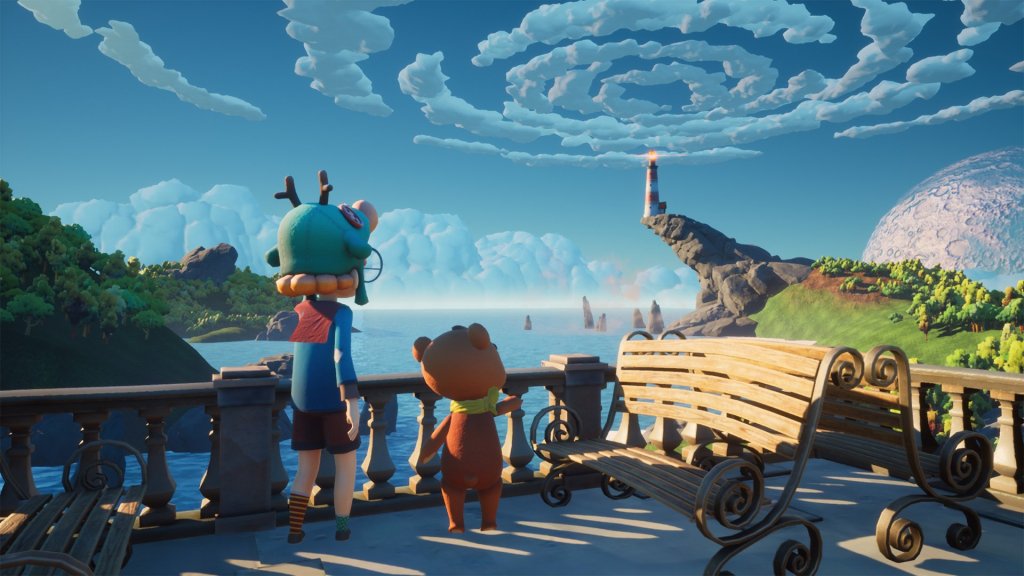
The biggest issue I found with Daydream: Forgotten Sorrow wasn’t with its lack of a narrative to draw players into the action and spur them forward, however.
For me, the biggest problem was with the numerous environmental puzzles that must be overcome in order to progress.
Though many can be quite satisfying to solve, the game’s lack of a tutorial – except very basic ones at various points, which in themselves are pretty lacking – means that you’re often left wondering what you can or can’t do, with no indication as to what objects or environmental features in the game’s (admittedly beautiful) world are there to be interacted with.

Some puzzles require you to use a skill or technique that is completely out of left field – perhaps utilising a companion such as your ever present teddy bear, Birly – and the side on perspective of the on/off pseudo 3D world (meaning that sometimes it does shift to 2.5D) make the platforming and puzzling a case of trial and error, more than anything that makes you feel clever for solving it.
I must stress, however, that Daydream: Forgotten Sorrow is an absolutely beautiful creation from an audiovisual perspective; I played the game on my Steam Deck and it looked gorgeous throughout.
However, the gameplay proved to be endlessly frustrating, with the slow paced character and inconsistent environmental puzzling – the difficulty curve for said puzzles also jumping all over the place – being a near constant cause of annoyance.
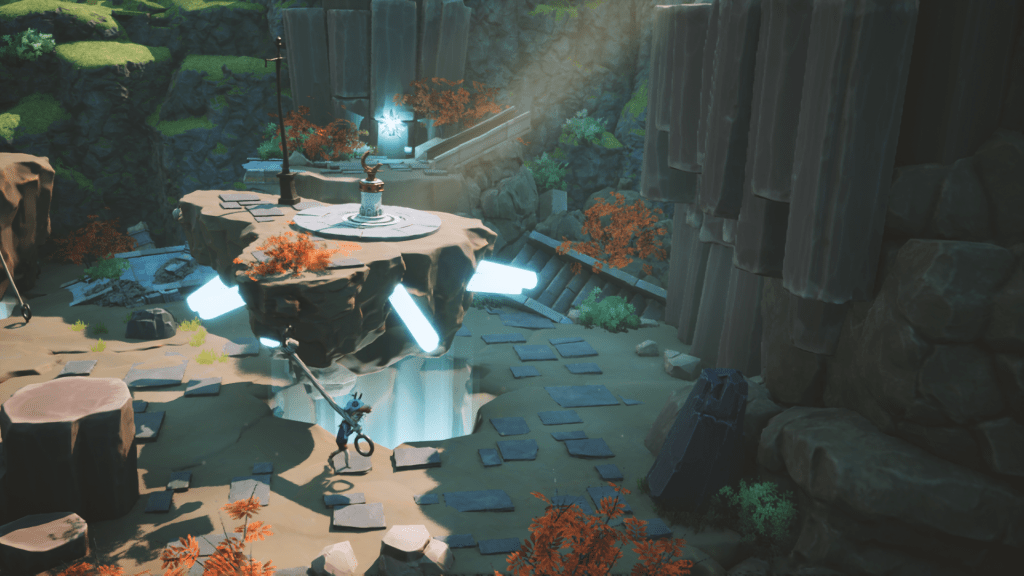
It’s a shame, because clearly an awful lot of care and attention has gone into making Daydream: Forgotten Sorrow look and sound stunning, but the level and puzzle design never matches the quality of the game’s fantastic audio and visual design.
Daydream: Forgotten Sorrow is out now on Steam; console versions are planned. Many thanks to the publisher for providing me with a code for review purposes.



 MLGG: Pop Culture News, Reviews & Interviews
Leave a comment