

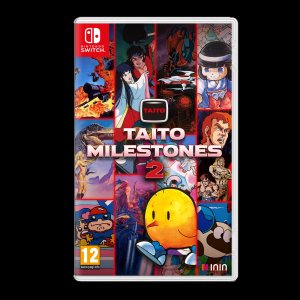
In my review of the first Taito Milestones collection, I noted immediately that there aren’t many video games companies who have left such an indelible mark on the industry at the level that Taito have.
If they’d stopped developing and publishing arcade games after Space Invaders alone, that’d still be true – such is the level of that game’s impact on the world of video games.
As this collection and the previous one demonstrates, however, they most certainly didn’t stop releasing games after Space Invaders – many of which are, if not quite as iconic as that classic, certainly incredibly fondly remembered.
The interesting thing about both of the Milestones collections so far, however, is just how deep they’re willing to go into Taito’s long history – going way beyond the obvious classics.
Though not all have aged gracefully – and, in fairness, may not have even been considered unmissable in their day – I always find compilations of lesser known titles much more interesting than retro collections filled with incredibly familiar games that have never really gone away.
Covering 1984-1992, if you weren’t there to witness the development of arcade games at the time, it may be surprising just how rapid the technology improves between games, in some cases even when they’re just a year apart.
So what’s here?
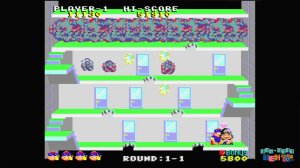
Firefighting platform oddity Ben Bero Beh is the oldest title on the collection – and it’s one that I’ve never heard of before. It’s good, though it’s not particularly intuitive in the way that most arcade games are – so it does have a bit of a learning curve, but it’s worth persevering with.
One of those remarkable advances in technology happens with Legend of Kage, which released just a year after Ben Bero Beh – and looks phenomenally advanced in comparison. It’s unfortunately not a game that’s aged as well, though its hack and slash gameplay, with its shifts between horizontal and more vertical stages, does have a unique feel.
1986’s Kiki Kaikai feels like an unusual fusion between top down action adventure and vertically scrolling shooter; it’s a genuinely fun game.

One of the most well known and fondly remembered games on the collection is 1988 platform shooter New Zealand Story, which sees you in charge of a cute kiwi, armed with arrows with which to take down enemies. The bold and colourful, beautifully drawn pixel art visuals still look great – and it has fantastic level design too. New Zealand Story is fondly remembered for a reason: it’s fantastic.
1989 sideways scrolling shooter Darius 2 – here in its ultra wide arcade edition that filled three screens on the original machine – is a stunning, massively enjoyable experience even now, despite being pretty challenging for someone like me; an admitted noob when it comes to shmups.

Gun Frontier and Liquid Kids both arrived in 1990, but couldn’t be more different. The former is another challenging, but excellent, shmup; in contrast to Darius, it’s vertically scrolling. Liquid Kids is a cutesy platformer with a level of challenge that borders on the unfair; it’s technically impressive for a game made at the beginning of the 90s, but it’s definitely lacking the magic of a game such as New Zealand Story.
Solitary Fighter, from 1991, is a sequel to Tito’s Violence Fight. Though it’s a one on one fighter – all the rage back then thanks to the recent release of the iconic Street Fighter 2 – it actually feels more like the open arena violence of games such as Pit Fighter, than the 2D back-and-forth, single plane action of the aforementioned Capcom classic. It’s an interesting curio, but you’re unlikely to find much of interest here unless you’re a die hard fighting game fan.
Another horizontally scrolling shoot ’em up, Metal Black, which originally came out in 1991, is also present. It’s no Darius, but it’s a decent enough game that’s worth playing.
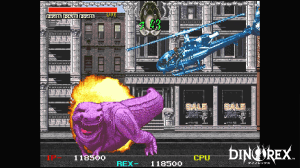
Finally, we have 1992’s Dino Rex – another fighting game, this time featuring one on one battles between prehistoric creatures in modern settings. It’s an interesting curio and one that’s unlikely to be familiar to many players, but it’s not likely to leave a lasting impression. It’s also not likely that you’ll revisit it very often.
Despite this being the second Taito Milestones collection, there’s still so much more in the company’s oeuvre that’s not been featured – including lots of classics that could still be compiled in a third or even fourth collection, so hopefully we do see more of these collections coming to contemporary consoles.
Though so many of their iconic titles don’t feature here or in the first collection, it’s refreshing to discover ‘new’ titles, even if they aren’t all hidden gems from Taito’s library – and it’s a great way to preserve experiences that may otherwise have dropped into obscurity too.
Taito Milestones 2 is available now for Switch, both as a physical edition or digitally. If you purchase the game via the links included in this review, I may earn a small amount of commission that helps me to keep this website going. Thanks for reading!
Many thanks to PR Hound for providing me with a code for review purposes.

 MLGG: Pop Culture News, Reviews & Interviews
Leave a comment