
Alternate takes on comic book characters are nothing new. DC themselves have been pulling this trick off successfully for decades, and even Marvel have a history of doing the same thing in their What If? stories, among others. Of course, we rarely see a continuous series featuring a variant of a popular character’s saga, but this has been hugely successful in the past; see the different versions of Marvel’s Ultimate Universe, for a really good example of this.
In a similar vein to Ultimate Marvel, which ran for a significantly long time in the 00s and has returned since then too, DC have created the Absolute universe. This has seen multiple, quite radical twists on many different characters being huge critical and commercial successes. Even when they’re incredibly leftfield and experimental, in the case of Absolute Martian Manhunter, for example.
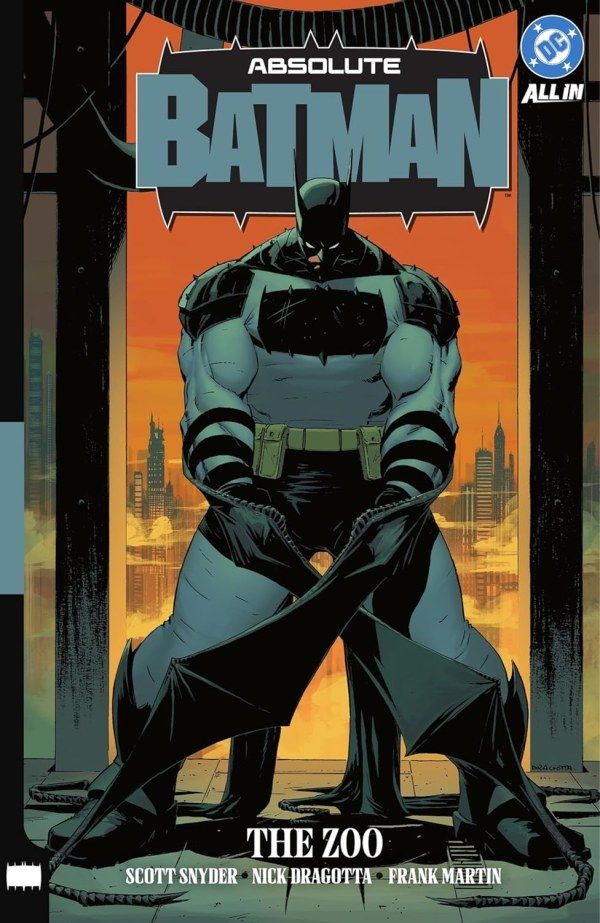
Absolute Batman kicked off the Absolute Universe, and did so in pretty spectacular fashion. It focuses on a Bruce Wayne who doesn’t have immense wealth, or in fact any wealth at all; instead, his father was a school teacher who’s the victim of a random, shocking act of violence, and Bruce has grown up to become a construction worker. Using his brains, skills and obvious muscle (this Batman is monstrously huge), he takes on a citywide epidemic of seemingly unstoppable, masked gang members who don’t seem to care who they’re hurting, torturing and killing, or why. This Batman is determined to find out what’s going on, as well as who’s behind it; and he’s going to absolutely destroy them when he does.
There’s been plenty of fair comment about how Absolute Batman takes many of the worst excesses of 90s ‘extreme‘ comics and just reapplies them. This is a giant Batman with a spiked suit, ears which can be lethal stabbing implements and even a multifunctional, deadly cape, as well as a Bat symbol which doubles as an axe when needed.
Yet the difference is that 90s comics were often just surface level, using a rule-of-cool style regardless of whether or not its art and characters made narrative sense. That’s not the case with Absolute Batman at all; writer Scott Snyder crafts a hugely compelling, truly exciting and yes, pretty extreme (in a much more positive sense) narrative which feels fresh, involving and unpredictable.
There’s a rug pull right at the start, when the gritty, noir-esque narrator is revealed to be someone other than who you assume. And that particular character (no spoilers here) has been dramatically reinvented.
As have many others; Bruce’s group of close friends are made up of his usual rogue’s gallery. Riddler, Penguin et al; of course, not in their villainous alter egos yet, but hints (albeit slightly clumsily) do keep being dropped about their eventual heel turns.
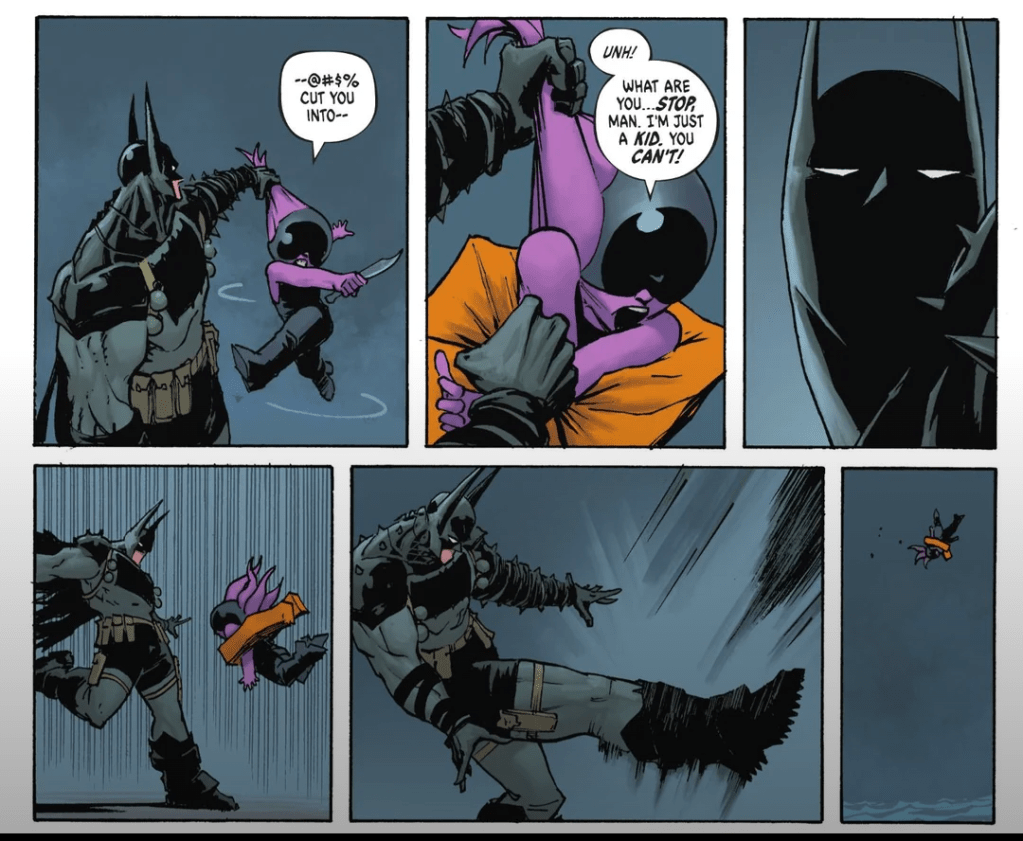
And the high tech nature of the antagonists in this opening arc brings a known villain and his cronies up to date, and feeling like a genuinely terrifying threat. Though everything is very dark, in terms of content, the art does have a great sense of scale and style, with Nick Dragotta’s stylised, detailed art complemented beautifully by Frank Martin’s colours.
The chunky, heavy-set designs of Batman and his gadgetry really set him apart from his main universe counterpart, as do the designs of his antagonists and other cast members.
I can’t believe it took me so long to jump on board; I was quite dismissive of Absolute Batman, I must admit, even after really enjoying the surreal Absolute take on Martian Manhunter; after reading the first volume, I’m all in.
 MLGG: Pop Culture News, Reviews & Interviews
Leave a comment