

Version Played: Switch (Also available on: Mac, WIndows, Xbox One) – Published by: aPriori Digital
It’s very rare that a game can really make you ponder the deeper, more existential questions that sometimes nag at us in our more contemplative moments. Perhaps even more unexpected is that the rather philosophical game in question would be set during a conversation between two mech pilots after a deadly firefight with the enemy.
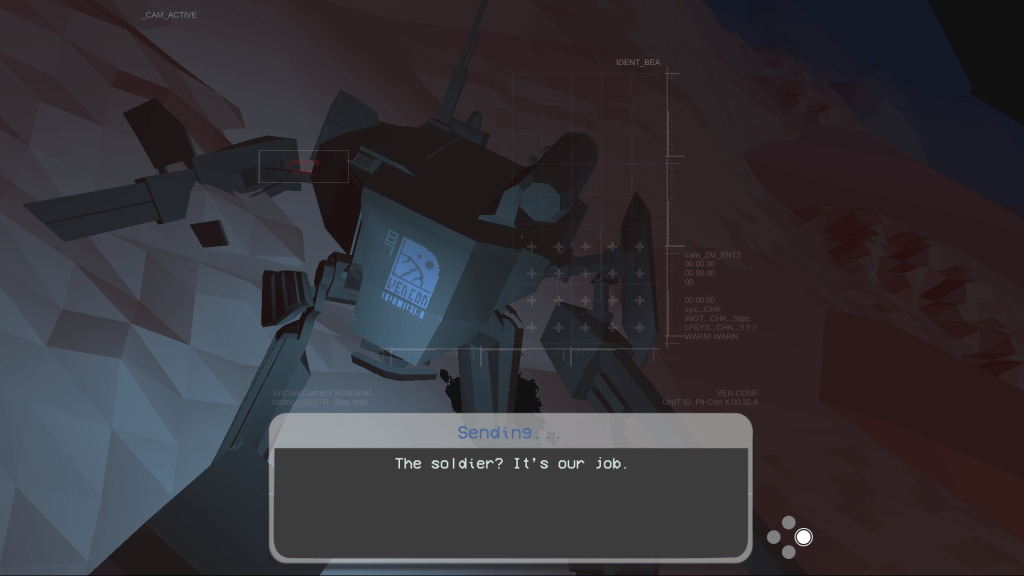
It’s very difficult to categorise a game of this nature, which is deliberately short and aims for maximum impact with its subject matter – though it is, essentially, a visual novel. There’s no grand visual flourishes – though the mostly static scenes you’re presented with do have a very minimalist, low poly look and a small number of animated elements.
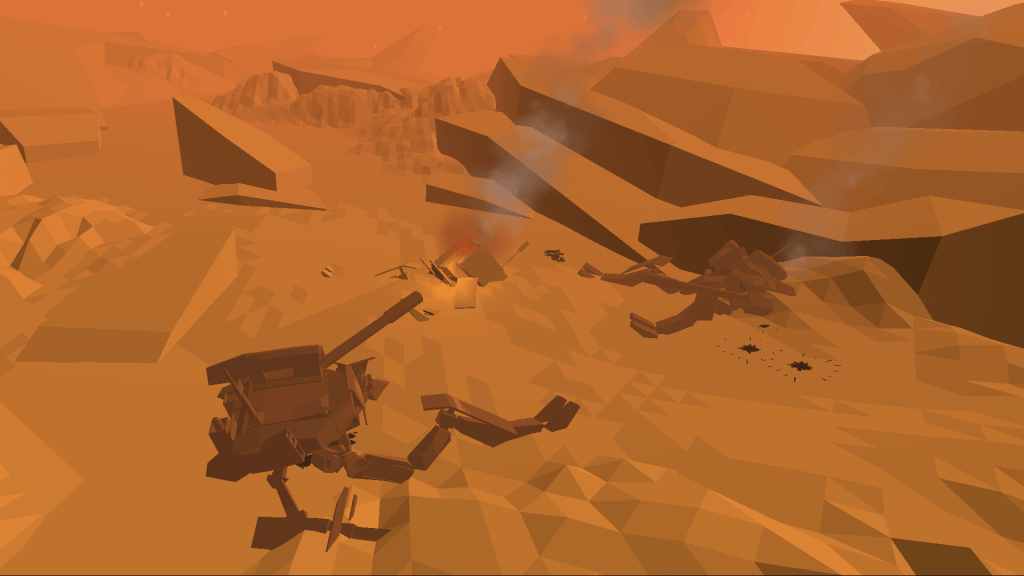
The conflict that’s led to the two pilots pondering the nature of existence has already taken place by the time the game begins, so it really is a game that’s focused entirely on the narrative and the choices you make that will lead you to the end of the very short story. It’s a visual novel, of sorts, though there doesn’t seem to be any way to end the story other than the inevitable climax.
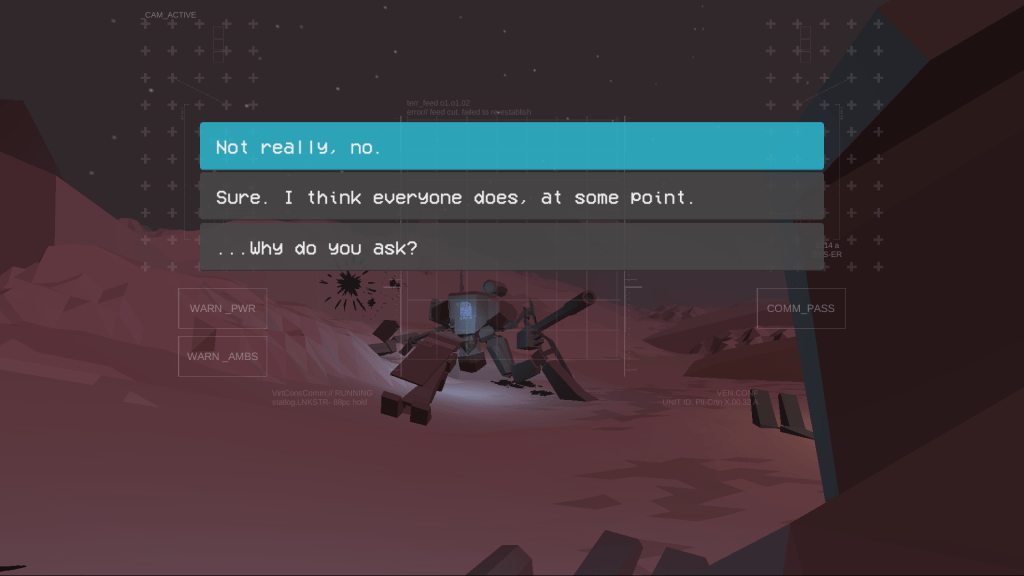
The very frank conversation between the two pilots is full of (censored) profanity, which is understandable given the frustrating situation they find themselves in. Your choices in responding to your colleague’s musing will often be just as downbeat as her topics of conversation, which cover some heavy subject matter, including God, mortality, free will and reality itself.
The writing is fantastic. The soundtrack – particularly the song that plays over the end credits – is superb. The worldbuilding is excellent, which is particularly impressive as much of it, by necessity, needs to be imagined by the player.
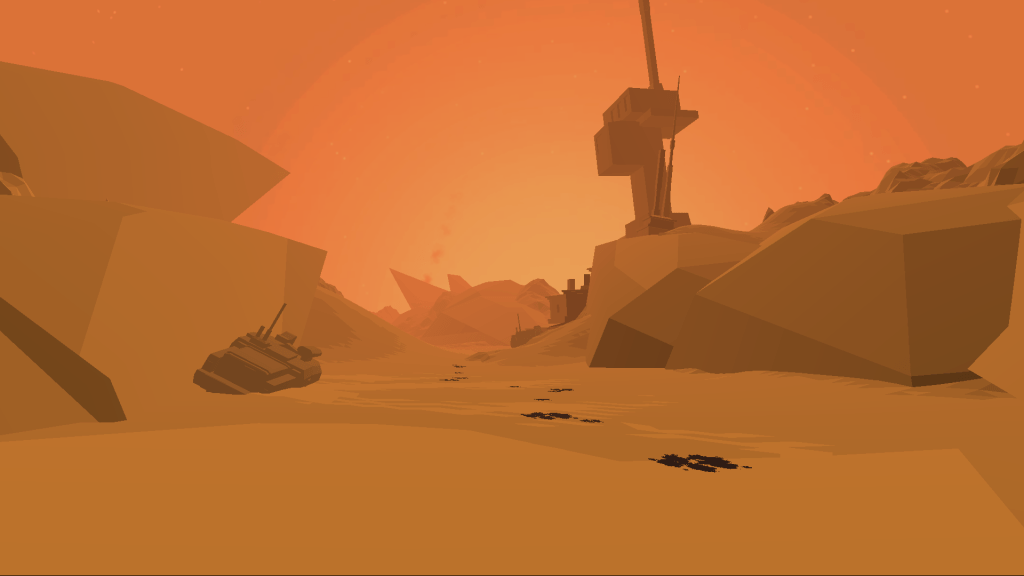
It’s a very short and very niche experience, however. It’s one that I’ve returned to more than once – the bitesize nature of the game’s length lends itself to multiple playthroughs – but the downbeat nature of the story and the weighty subject matter are certainly not going to be of universal appeal.
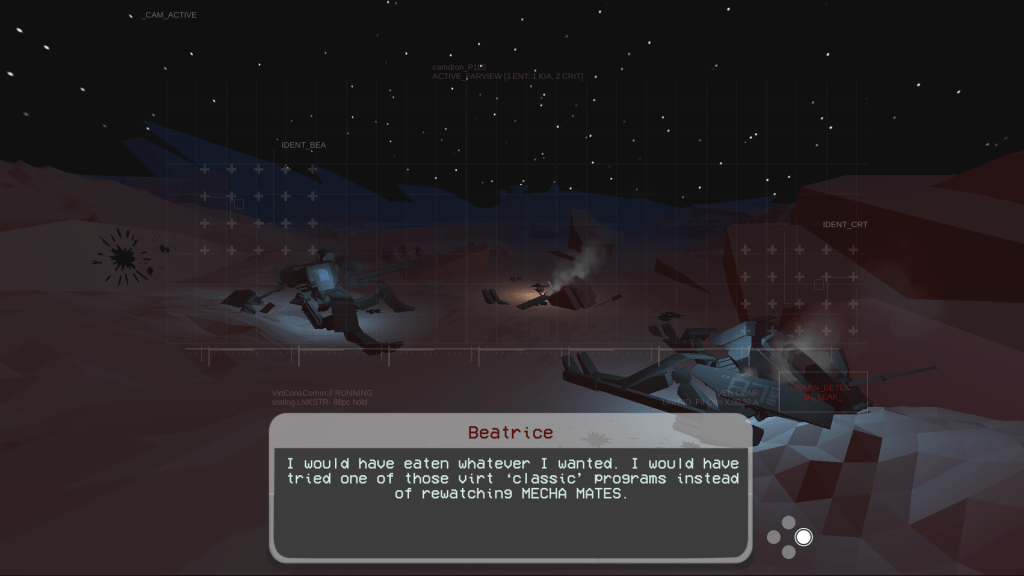
Though not a game that’s going to appeal to the mainstream, as an answer to the seemingly eternal question of whether or not games can be art, it’s a resounding success.
Disclaimer: I was provided with a game code by the publishers for review purposes.


 MLGG: Pop Culture News, Reviews & Interviews
Leave a reply to Mr. Wapojif Cancel reply