
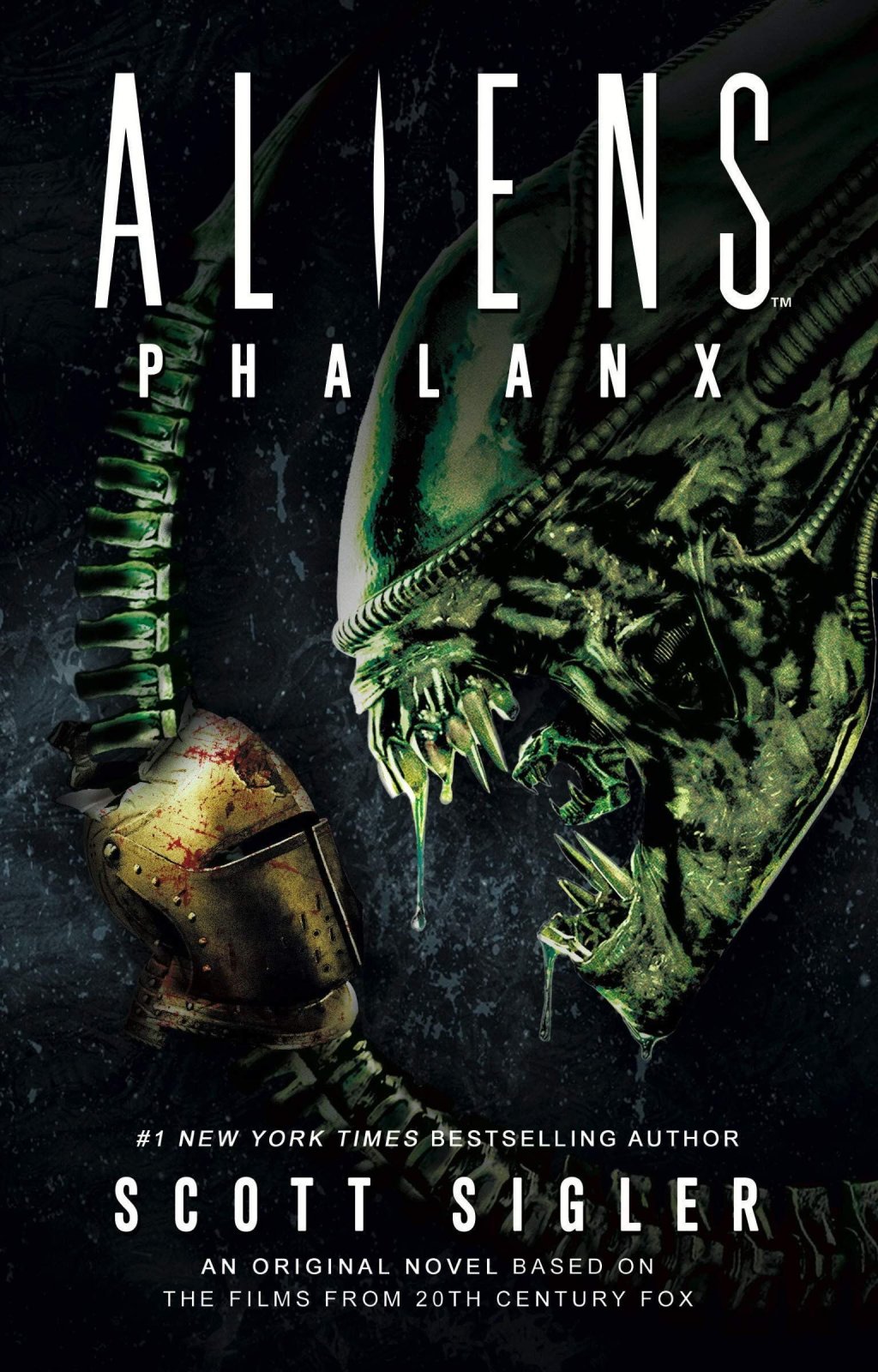
I’ve read a lot of xenomorph-related books this year, having got myself all excited about video game Aliens: Fireteam Elite, which is finally out tomorrow. In getting myself all worked up about the new game – the first Alien console game since Alien: Isolation back in 2014 (which was followed by a Five Nights At Freddy’s-esque mobile sequel – Alien: Blackout – in 2019) and the first Aliens console game since the disastrous Aliens: Colonial Marines in 2013 – I read the tie-in novel, Aliens: Infiltrator (by Weston Ochse), when it was released and actually found it to be a pretty fun read.
So I decided to work my way through the most recent book series, which started with Tim Lebbon’s 2014 Alien: Out of the Shadows. Interestingly, Lebbon’s 2014 book was the first original novel set in the Alien universe, with previous books being adaptations of existing material – either novelisations of the movies or adaptations of various Dark Horse comics. There have been highs along the way (with Alex White’s Alien: The Cold Forge being an incredibly strong entry in the series) and a few lows, but the series has never been less than entertaining. In Scott Sigler’s Phalanx, however, we truly have the best novel in the series so far.
The planet of Ataegina is home to a number of human cities, with their own medieval-style customs and cultures. Previously at war with each other, the humans have mostly admitted defeat and retreated from a common enemy: the Xenomorphs, which roam the world freely from their home in Black Smoke Mountain – also home to a Queen Alien. Human ‘runners’ make dangerous journeys to trade supplies and information between the subterranean city strongholds – and one trio, the resourceful and ambitious Ahiliyah, gentle giant Brandun and clever, foul-mouthed Creen, stumble upon a way to potentially fight back against the Xenomorph hordes.
The setting of Aliens: Phalanx gives it an entirely unique feel within the realm of Alien fiction, but as part of the latest series of novels it’s actually considered canonical in the timeline of the films. Sigler’s story is superb, with some absolutely stunning world building and lore, from the differences between each society’s customs, to the alien (even non-xenomorph) life found on Ataegina, not to mention the unique properties of the planet’s plant life and elements such as the bio-luminescent water, utilised in a clever and logical way. Sigler paints a believable and compelling picture with his prose; along with the world and its history – that’s deeply explored and brilliantly evoked – the characters in the story are brilliantly detailed and compelling too, each in their own way. The depth to which aspects such as military tactics are discussed and implemented is really impressive and believable too.
Though at first it concerned me that the creatures native to Ataegina had names that wouldn’t seem out of place within a Dr. Seuss book – with creatures called Vooterverts, Getum Bugs and Vindeedees – even this fits into the richly detailed lore of Phalanx.
The book truly feels like Game of Thrones-meets-Aliens in high concept terms; the medieval societies have strongly enforced laws and some are overly patriarchal in nature, with women being forbidden from embodying certain roles within their own stronghold. The inter-colony politics and even the social situation within each stronghold is fascinating and captivating, with plenty of socio-political commentary bubbling under the surface. It even opens with a fantasy novel-style map. There’s also an impassioned plea from Sigler at the beginning of the book to refrain from spoilers when discussing the story, which I hope I’ve avoided entirely in my overview and comments on the novel’s contents.
It’s a pretty astonishing piece of work from Scott Sigler that takes a lot of risks in moving almost entirely away from the familiar pattern of almost all Alien and Aliens fiction, which is to say that it both avoids the familiar horror and action tropes of the series, but brings all of the tense sequences and gore we’ve come to expect, just in a new way.
For readers either not interested in the usual Alien books or bored of the over familiar settings and plots of the series so far, I’d still urge you to read Aliens: Phalanx. It’s an absolutely incredible way to continue the series and it’s a crying shame that so far, the next few books in the series seem to be taking us back to more familiar territory. Though wrapped up reasonably neatly by the book’s end, I wouldn’t be sorry to see a return to Ataegina at some stage. Aliens: Phalanx is an absolutely unmissable book, a new milestone for the series that surpasses the previous two best books (Alien: The Cold Forge and Alien: Echo) with ease, and it should be an essential read even for readers with only a passing interest in the Aliens franchise.

 MLGG: Pop Culture News, Reviews & Interviews
Leave a reply to My Book of the Year 2021 – GeekMid Cancel reply